


It's just not just more power, it's smarter power
- cory young
- Mar 1
- 4 min read


There’s a certain kind of electrician who lives for new builds. Big open studs. Clean prints. Fresh coffee in a travel mug that says “Voltage Is My Love Language.”
And then there’s guys like Jason from Flow Electric — the one who walk into a 1983 split-level with a hot tub on order, an EV charger in the Amazon cart, and a homeowner asking if their panel can “just handle it.”
Spoiler: it usually can’t.
Jason’s world is residential and commercial service work. Renovations. Upgrades. The real stuff. The “why is this switch humming?” and “can we make this 100-amp dinosaur behave like it’s 2026?” kind of work.
And business is booming.
Service Upgrades Are the New Granite Countertops
EV chargers. Hot tubs. Basement suites. Smart everything.
Homeowners aren’t just renovating kitchens anymore — they’re electrifying their lifestyles. Jason’s seen a surge in service upgrades, especially tied to EV chargers. The classic move used to be: rip out the panel, drop five or six grand, and call it a day.
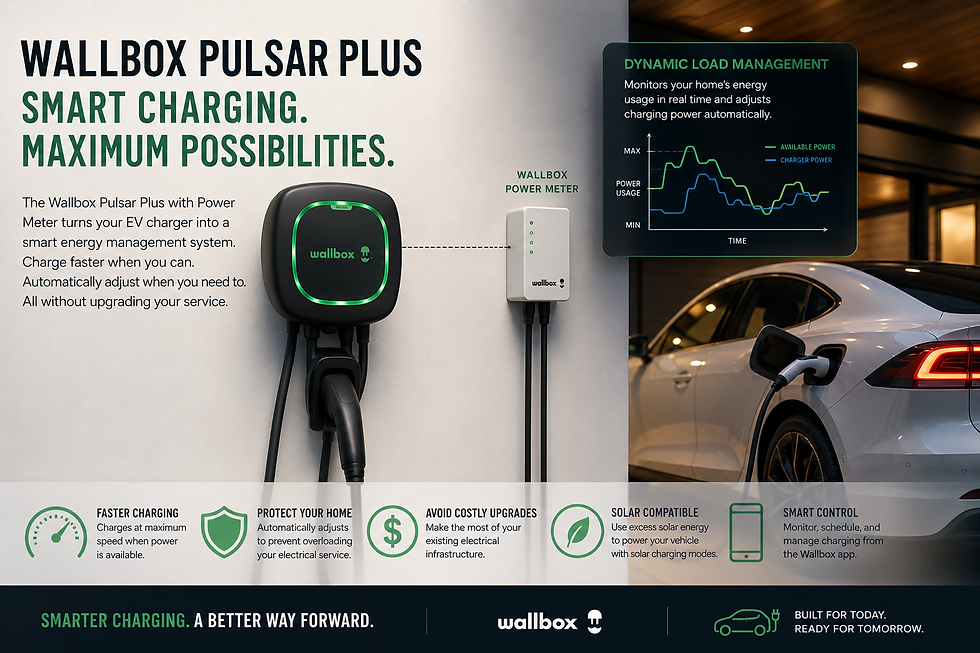
Now? Enter smart load management systems.
Instead of upgrading the entire service, you can install an energy management system that monitors demand and tells loads to behave. It’s basically a traffic cop for electrons. When your oven and EV charger try to throw a party at the same time, the system steps in and says, “Not today.”
The beautiful part? A lot of these systems are plug-and-play. Set your service limit, wire it as a contact, and you’re in business. Less copper ripped out of walls. More intelligent control.
This is where the industry is quietly shifting — not just more power, but smarter power.
Smart Homes: From “Cool” to Expected
Jason’s digging into smart systems like Lutron Caseta and Control4, and like most electricians who’ve been paying attention, he’s now staring at the new kid on the block:
Matter.
Matter is essentially a universal language for smart devices. Instead of every brand speaking its own dialect and refusing to talk to the neighbors, Matter is trying to make them all bilingual. Your IKEA sensor talks to your relay. Your relay talks to your controller. Your controller talks to your phone. Everyone’s at the same dinner table.
In theory.
We’ll treat that as a working hypothesis. The smart home industry has promised “seamless integration” before. But this time, the ecosystem backing it is serious.
What’s fascinating is how this bleeds into renovation work. You don’t need to gut a house to make it smart anymore. Jason mentioned retrofitting older homes — 70s and 80s builds — with Caseta switches, Pico remotes, hidden motion sensors, under-cabinet lighting triggered by presence instead of a wall plate.
That’s not just convenience. That’s behavioral engineering. You’re shaping how someone moves through their own space with light.
Which brings us to lighting — the rabbit hole every electrician eventually falls into.
Lighting: The Wild West of Electrical
Lighting used to be simple. You powered it. It turned on. It glowed.
Now we’re talking lumens per square foot, circadian rhythm alignment, 0-10V dimming, tape extrusions, silicone channels, magnetic 48V track systems, drivers hidden in cabinets, and under-vanity glow at a 45-degree angle because the homeowner saw it on Pinterest and now it must exist.
Jason made a sharp point about commercial versus residential lighting.
“Commercial clients want efficiency at the lowest cost. Residential clients want a vibe. Ideally both.”
And the tech is moving fast. He replaced a 72-watt vapor tight fixture pushing 6,500 lumens with a 30-watt unit pushing 8,000 lumens. That’s not incremental improvement. That’s technological evolution in action.
The move from CFL to LED was big. The move from early LED to today’s integrated fixtures? Even bigger.
There’s chatter about low-voltage DC lighting systems — 48V standards, magnetic track systems, potentially code changes down the road. That’s still in “industry rumor” territory, but it points to a larger theme: heat management, efficiency, modularity.
Jason’s take was grounded. LEDs are already so efficient that the real gains now come from control — making sure lights are on when they should be and off when they shouldn’t be. Smart scheduling, motion sensing, load management. Not just better hardware. Better behavior.
High-End Is About Precision
Tape lighting in casinos. Hard track embedded in tile. Silicone diffused strips in bars. Under-cabinet lighting that disappears until it activates.
High-end work isn’t about throwing more light at a space. It’s about precision.
You’re balancing layout, heat dissipation, driver placement, serviceability, and aesthetics. You’re thinking about how a niche in a shower glows at 6 a.m. without blinding someone. You’re deciding whether that 45-degree under-vanity extrusion is worth the premium product that won’t yellow in two years.
Jason’s moving more into that market — and that’s where electrical work becomes half engineering, half design.
The Big Trend: Intelligence Over Amperage
If you zoom out, the pattern is obvious.
Homes aren’t just consuming more power. They’re demanding smarter distribution of it. Panels that think. Lights that respond. Systems that manage themselves.
The electrician is slowly evolving from “wire puller” to systems integrator.
And the ones paying attention — the ones experimenting with smart relays behind dumb switches and exploring new protocols — are positioning themselves for where this industry is heading.
Because here’s the thing: the future of electrical isn’t louder. It’s quieter. It’s hidden in software, automation logic, and efficient drivers tucked inside cabinets.
It’s electrons behaving politely.
And if that doesn’t make you at least a little excited, you might want to check your voltage.


Comments