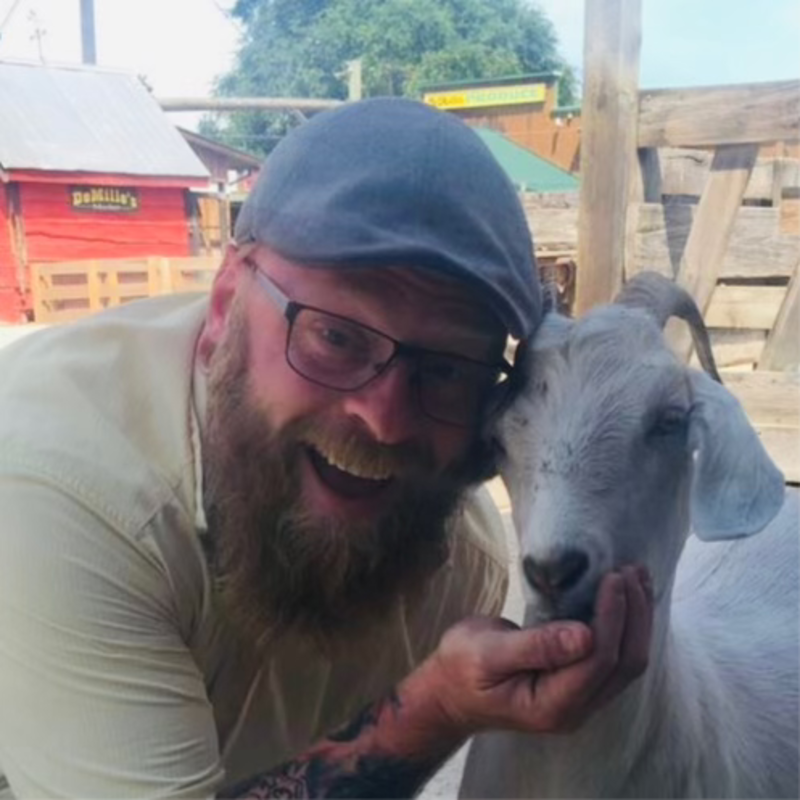

When you think of solar farms, you might picture rows of shiny panels soaking up the sun. But what if I told you there are sheep, chickens, robotic coops, and even 80,000 bees involved? Wade Heuscher is flipping the script on traditional solar farming.
As the manager of two utility-scale solar farms in Alberta—one at 41 MW and another at an impressive 81 MW—Wade is pioneering new ways to optimize solar infrastructure, regenerate land, and challenge public perceptions.
“At Strathmore, I have 110,000 panels… at Clydesdale, 189,726.” — Wade Heuscher
Together, these farms represent over 300,000 solar panels. They are designed for a 25-year operational life and built with the option to repower or reclaim the land after that term. Wade estimates that at the 25-year mark, solar panels will still operate at 90% capacity. However, by 35 years, they may become economically unviable.
“We’ll reassess everything at 25 years. Either swap the panels, or run them until it’s no longer worth it.”
What makes these solar farms unique isn’t just their size. It’s what’s happening underneath the panels.
Wade’s Strathmore site is Canada’s first agrivoltaic solar farm, combining solar energy with agricultural practices. Here’s what’s happening on the ground:
“We’ve gone from 400 sheep to 1,600 in three years… and we’re getting 331 lbs of honey in just a few months.”
This isn’t just novelty; it’s functional land use that improves soil, supports biodiversity, and counteracts criticism that solar farms waste agricultural land.
Read more about Old's College's research program
Despite this innovation, there's one piece still missing: battery storage.
“It’s about $1.25 million per megawatt to store power… and with no incentives in Alberta, it’s a tough sell.”
Wade explains that while Ontario offered full battery systems in exchange for fixed-rate PPAs, Alberta has no such support. This leaves utility operators to foot the bill themselves. Consequently, it makes return-on-investment calculations difficult, even if the infrastructure is technically ready for storage.
For more on energy storage policy differences, check out the Canada Energy Regulator – Energy Storage in Canada.
Aerial view of a commercial building featuring an extensive array of solar panels installed on its rooftop, harnessing renewable energy in a large-scale urban setting.

While Wade’s company, Capital Power, focuses on rural utility-scale solar, he sees massive potential in commercial rooftop systems.
“Why wouldn’t you cover a Walmart roof in panels? You’ve already got the real estate.”
This opens the door for future expansion of solar in urban areas, leveraging rooftops to reduce grid demand—especially as municipal climate goals continue to ramp up.
Learn more about this opportunity in the NREL Guide to PV on Commercial Buildings.
One of the biggest knowledge gaps in solar? DC power.
“It’s not like AC… the fusing works differently, and the danger is always live when the sun’s out.”
Wade notes that most construction is done by “solar installers” who take a 1–3 day course. However, qualified electricians are critical for operations and maintenance. Many new techs don’t fully understand DC theory, inverter operation, or DC/AC conversion mechanics.
He recommends specialized training focused on:
For techs and apprentices, consider:
From regenerative soil practices to community partnerships, Wade sees solar as a net benefit.
“We’re producing lamb, honey, eggs — and megawatts. We’re using every square inch of land for something valuable.”
What started as a patch of unproductive land is now a renewable energy hub, a biodiversity sanctuary, and a working farm.
The future of solar in Canada is not just about clean power; it’s about smart, multi-functional land use, technician education, and systems thinking.
Whether you’re an electrician, builder, or just someone who thinks sheep and solar don’t mix, this conversation with Wade Heuscher shows that utility-scale solar is more than big panels and big numbers. It’s about innovation, grit, and good old-fashioned problem-solving.
So, let’s embrace this new wave of solar farming and consider how we can all contribute to a more sustainable future.